

Gingivitis and pyorrhea
Swollen, bleeding, or receding gums
Bleeding gums when brushing is common, but not normal: it could be gingivitis or periodontitis, and both are best treated as soon as possible. Come and have them checked at our clinic in Jerez.
or call us at 956 339 083
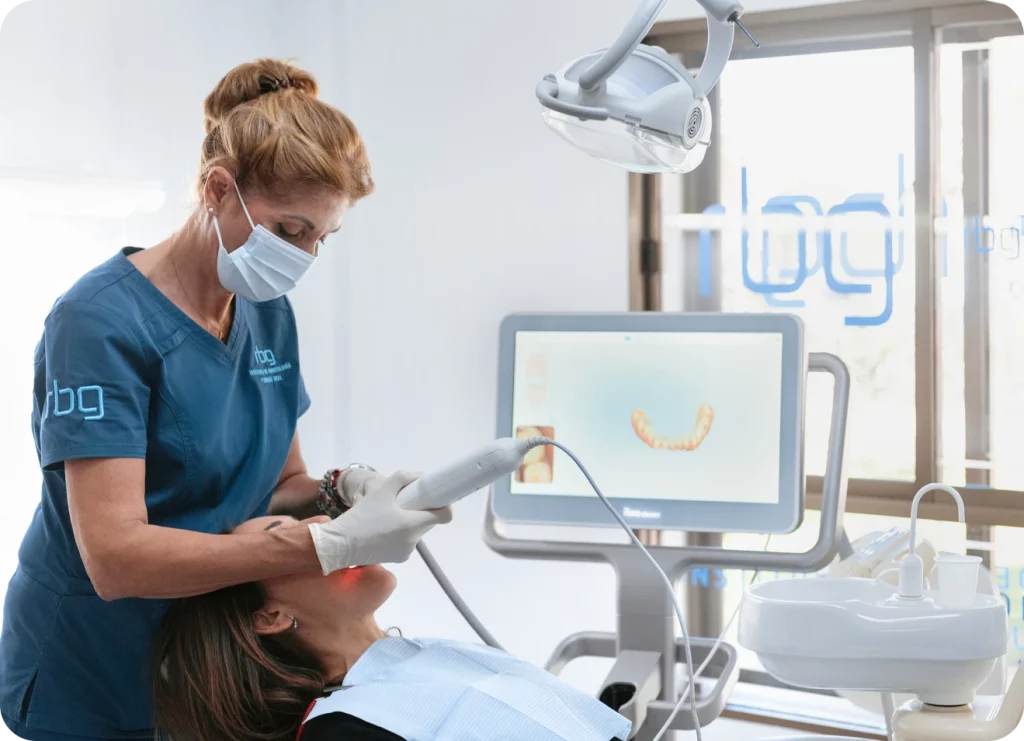
Gingivitis and pyorrhea: how to know if you have them
It almost always starts with bacterial plaque that accumulates between the tooth and the gum. If it isn't removed, the gum becomes inflamed: this is gingivitis. If it progresses, the inflammation reaches the bone and tissues that support the tooth: this is periodontitis, which many people know as pyorrhea.
That's why it's important to recognize the signs early.
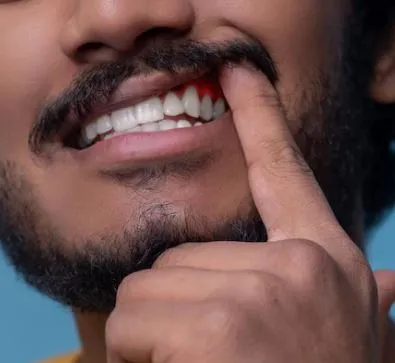
Gingivitis
The gum becomes inflamed
It can be reversed if treated in time.
Signs of gingivitis
- Red and swollen gums.
- They bleed when you brush or floss.
- Gum discomfort or pain.
Pyorrhea
Periodontitis: reaches the bone
It stops, but the bone doesn't return
Signs of pyorrhea
- Gums that recede and teeth that appear longer.
- Bad breath or a bad taste in the mouth that won't go away.
- Teeth that separate, move, or change position.
- Sensitivity to cold in the exposed part of the tooth.
- Pus between the tooth and the gum.
At first, periodontitis is almost painless, which is why it's often discovered late. If you smoke, your gums may bleed less even when they're diseased: tobacco masks the signs.
Why do gums become inflamed and what happens if they are left untreated?
Plaque is the main cause, but not the only one. These are the factors that have the greatest influence.
Plaque and tartar
Plaque that is not removed with a toothbrush hardens over time and forms tartar, and tartar can only be removed in a dental office.
Tobacco
Smoking increases the risk of pyorrhea and makes the treatment less effective.
Diabetes and other factors
Poorly controlled diabetes, hormonal changes during pregnancy, some medications, stress, and family history also play a role.
When the gums recede
In addition to periodontitis, gum recession can be caused by brushing too hard or with a hard brush, and by the position of some teeth.
If it is not treated
Periodontitis gradually destroys the bone that supports the teeth. These teeth begin to loosen and, over time, can be lost. Furthermore, gum disease is linked to other health problems, such as diabetes.
Gingivitis
The gum becomes inflamed and bleeds
Pyorrhea
Supporting bone is lost
Loose teeth
Over the years, they can be lost
When to see the dentist for your gums
Don't wait until it hurts: make an appointment if any of these things happen to you.
- Your gums bleed often when you brush or floss.
- Swollen, red, or sore notes.
- You see them receding or your teeth seeming longer.
- You have bad breath that won't go away.
- You have a loose tooth or you notice that they are separating.
or call us at 956 339 083
When to also consult a doctor
If your gums bleed on their own, without brushing, or excessively, or if you develop unexplained bruises on other parts of your body, consult your doctor: sometimes bleeding has other causes. And if you have a lump with pus and severe pain, it could be an abscess: make an appointment as soon as possible.
Meanwhile
Keep brushing gently with a soft-bristled brush, and clean between your teeth as well. Stopping brushing because of bleeding will only worsen the inflammation.
How we treat gums at RBG Clinic
The treatment depends on how far the disease has progressed, and the dentist will explain it to you after assessing you.
At RBG Clinic, periodontics is one of the areas that our clinical director, Dr. Francisco Rábago, focuses on.
01
For everyone
First, an assessment
We'll examine your gums and the supporting structures of each tooth, and provide you with a diagnosis, a treatment plan, and a cost estimate. If you're a new patient, this first consultation is free.
02
If it's gingivitis
Professional cleaning
A single cleaning at the clinic is usually sufficient, along with improved hygiene at home. At RBG Clinic, we use ultrasound and Air Flow for cleaning.
03
If it is periodontitis
Gum treatment
It's also necessary to clean below the gum line, at the root of the teeth, to remove tartar and bacteria that accumulate there. Depending on the case, other treatments may be necessary.
04
Maintenance
Reviews to prevent it from progressing
Periodontitis can be managed, but it needs to be monitored. After treatment, you'll need regular checkups and cleanings, as often as your dentist recommends.
Why choose RBG Clinic?
RBG Clinic is located at number 20 Sevilla Street, in Jerez de la Frontera. If you are visiting for the first time, the consultation and diagnosis are free.
+20
years in the sector
+2000
patients
Free
the first visit, if you are a new patient
What other patients say about Dr. Rábago
Some of our customers would like to share their experiences.
5 reviews
Doctoralia. Fantastic, everything was perfect, nobody could solve my problem and he did, he gave me back my smile and, more importantly, my health.
Maria Cristina
Francisco Rábago and his entire team are magnificent professionals. They provide exceptionally friendly service and, most importantly when visiting the dentist, they take special care to ensure that the treatment is ABSOLUTELY PAINLESS.
Manuel Álvarez
Five years ago, I went to these professionals in desperation, and I can only say that Dr. Rabago gave me back my smile. He treated my TMJ problem caused by bruxism. I had been turned away from other clinics where they offered neither a solution nor an explanation. From the very first consultation, he had a clear and accurate approach. I only have words of gratitude. And his team is phenomenal. Thank you for your professionalism and the care I received. We will continue working together! Thank you so much.
Cloti Galán
The professionals at this clinic are exceptional, and the service is unbeatable. It's incredibly reassuring to be in the hands of such skilled professionals who treat you with such care, especially when you're dreading going to the dentist. Dr. Rabago is an exceptional professional, and his team is fantastic. With them, there's no reason to fear going to the dentist. I've been treating my dental problems with them for years, and I wouldn't trade them for anything. They give me peace of mind and confidence. .
Ruiz Trujillo
The best professionals, a personal touch, empathy, kindness… and above all, the peace of mind of knowing you're in the best and most expert hands. The team is headed by Dr. Rábago, an exceptional professional in every aspect, from the hygienists to the reception staff. Without a doubt, the best choice.
Mj MT
Questions about gums and periodontitis
These are the most frequently asked questions about gums. If you have another one, write to us.
How can I tell if I have periodontitis?
The most common signs are bleeding, receding, or bad breath gums, and loose or separating teeth. But in the beginning, it often shows few symptoms, so the only way to know for sure is to have your gums checked by your dentist.
Is there a cure for periodontitis?
In many cases, it can be stopped and kept under control, especially if treated early. What doesn't grow back on its own is the bone that has been lost. That's why, after treatment, follow-up appointments are necessary to prevent it from progressing.
Why are my gums bleeding?
Most often, they are inflamed due to plaque: this is the first sign of gingivitis. Pregnancy and some medications can also contribute. If they bleed on their own or excessively, consult your doctor.
Why do gums recede?
It can be caused by periodontitis, brushing too hard or with a hard-bristled brush, or the position of some teeth. Knowing the cause is important because the treatment depends on it.
Do receding gums return to their normal position?
No, they can't be stopped on their own. What can be done is to slow down the recession by treating its cause. In some cases, gum surgery allows for covering part of the root; your dentist will tell you if this is an option for you.
One of my teeth is loose: can it be saved?
In an adult, a loose tooth is usually a sign of advanced periodontitis, although it can also be due to a blow or an infection. If treated promptly, it can often be saved; it depends on the remaining support. Make an appointment as soon as possible.
Book an appointment at RBG Clinic
If your gums are bleeding, swollen, or receding, don't delay. Write to us or call us, and we'll check them out.
Phone: 956 339 083
WhatsApp: 661 766 827
Schedule
Monday to Thursday: 9:30 a.m. to 2:00 p.m. – 3:00 p.m. to 6:30 p.m.
Friday: 09:30 – 14:00