Bruxism · TMJ and occlusion
Bruxism and TMJ problems in Jerez
If you clench or grind your teeth, especially at night, you can end up with worn teeth, jaw pain, or headaches. We'll find the cause and help you protect your teeth and jaw joint.
or call us at 956 339 083
What is bruxism?
Bruxism is the habit of clenching or grinding your teeth. It can disrupt the temporomandibular joint (TMJ), which connects the jaw to the skull, and cause pain in the mouth, head, neck, or ear. It affects the entire masticatory system and can significantly limit daily life.
«Proper treatment of bruxism and TMJ problems can relieve persistent pain and improve the functionality of your chewing system.»
How far can it go?
From least to most serious
Tooth wear
The edges shorten, flatten, or chip.
Muscle overload
The jaw muscles get tired and painful.
ATM problems
The joint clicks, hurts, or doesn't allow you to open your mouth properly.
The most common signs
Just one is enough for the dentist to check it.
- Pain in the jaw or facial muscles, which may spread to the ear, head, or neck.
- Clicking sounds in the jaw when opening or closing the mouth, near the ear.
- Tiredness when chewing or difficulty opening the mouth fully.
- You wake up with a headache or a stiff jaw.
- Your teeth are worn down or someone hears you grinding them at night.
Many people grind their teeth in their sleep without realizing it. Often, it's discovered by the dentist due to the wear and tear, or by the person sleeping next to you because of the noise.
Why are you clenching your teeth?
The origin can be diverse; these are the most frequent causes.
Stress and tension
These are among the most frequent triggers: the tension of the day is released in the jaw.
The position of the teeth
If the teeth do not fit together properly when closing, the bite becomes unbalanced and overloaded.
The dream
Nighttime bruxism is the most damaging, because you clench your teeth hard without realizing it.
Habits
Biting nails or pens, chewing gum often, or consuming coffee, alcohol, and tobacco.
Concentration and effort
Many people clench their hands without realizing it while working, driving, or playing sports.
If you let it go
Tooth wear is irreversible: lost enamel cannot be regenerated. Over time, teeth shorten, break more easily, and the jaw joint becomes overloaded. And when this happens during sleep, it not only wears down your teeth but also affects your rest and your quality of life.
The sooner you protect your mouth, the less you'll need to repair it later.
At first
Wear and tear and discomfort
Later
Broken or sensitive teeth
If it progresses
TMJ and head pain
Is there a cure for bruxism?
You can't always break the habit, but you can control it and prevent damage. We work on two fronts: protecting your teeth and jaw joint, and reducing what makes you clench.
- The night guard protects your teeth while you sleep.
- We correct the bite if the teeth don't fit together properly.
- We repair wear and tear to restore form and function.
- We give you guidelines to relax your jaw during the day.
- If necessary, we can direct you to other professionals.
If you are a new patient, the first visit and diagnosis are free.
or call us at 956 339 083
If your jaw hurts now
Give him a break.
- Eat soft foods and avoid large bites.
- Don't chew gum.
- Applying gentle heat to the area can relieve muscle tension.
- Avoid opening your mouth too wide, for example when yawning.
During the day
- Check if you're clenching: at rest, your teeth shouldn't touch.
- Lips together, teeth separated, and tongue relaxed.
- Do not bite your nails, pens, or other objects.
- Reduce your coffee and alcohol intake, especially in the afternoon.
- If you have a splint, wear it every night, even if you don't feel anything.
If your jaw locks and you can't open or close your mouth, or the pain is very severe, don't wait for a checkup: Call us at 956 339 083.
How we treat bruxism at RBG Clinic
We begin with a personalized diagnosis to find the cause. Then we explain the treatment and its cost, so you can decide before we start.
«Addressing bruxism and TMJ dysfunction early is key to preventing tooth wear and other associated problems.»
01
Diagnosis
We are looking for the cause
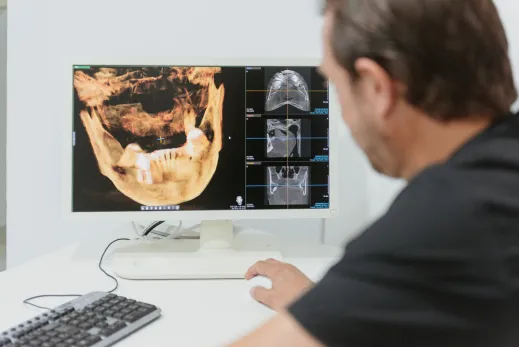
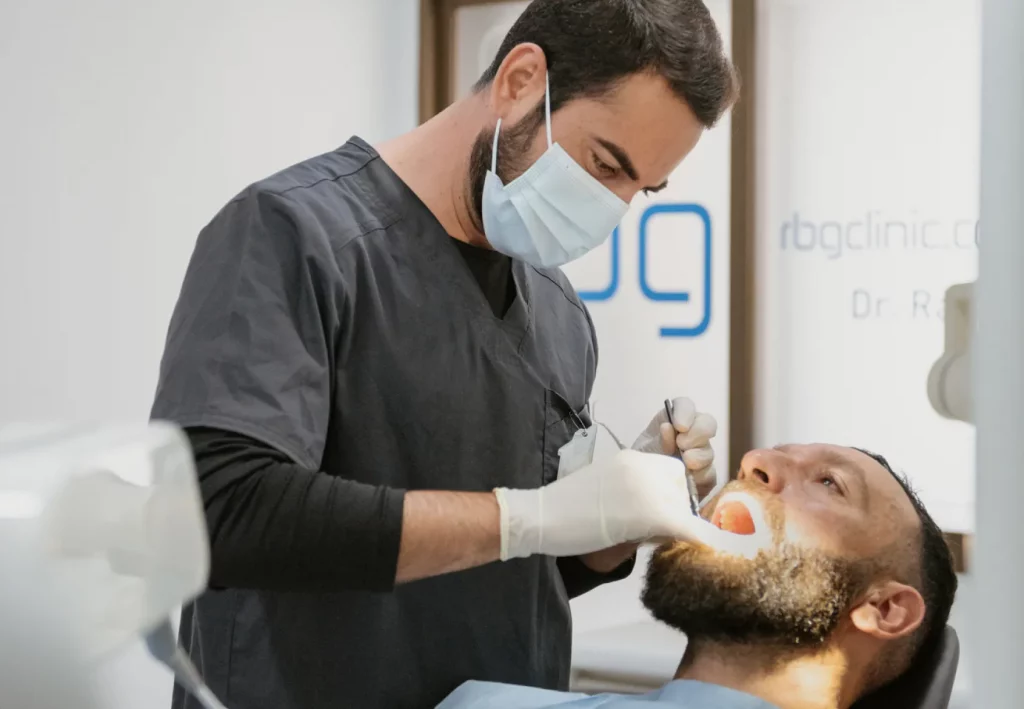
We checked the wear on your teeth, how you bite, your jaw muscles and joint, and we talked about your habits and how you sleep.
02
Occlusal splint
We protect your teeth
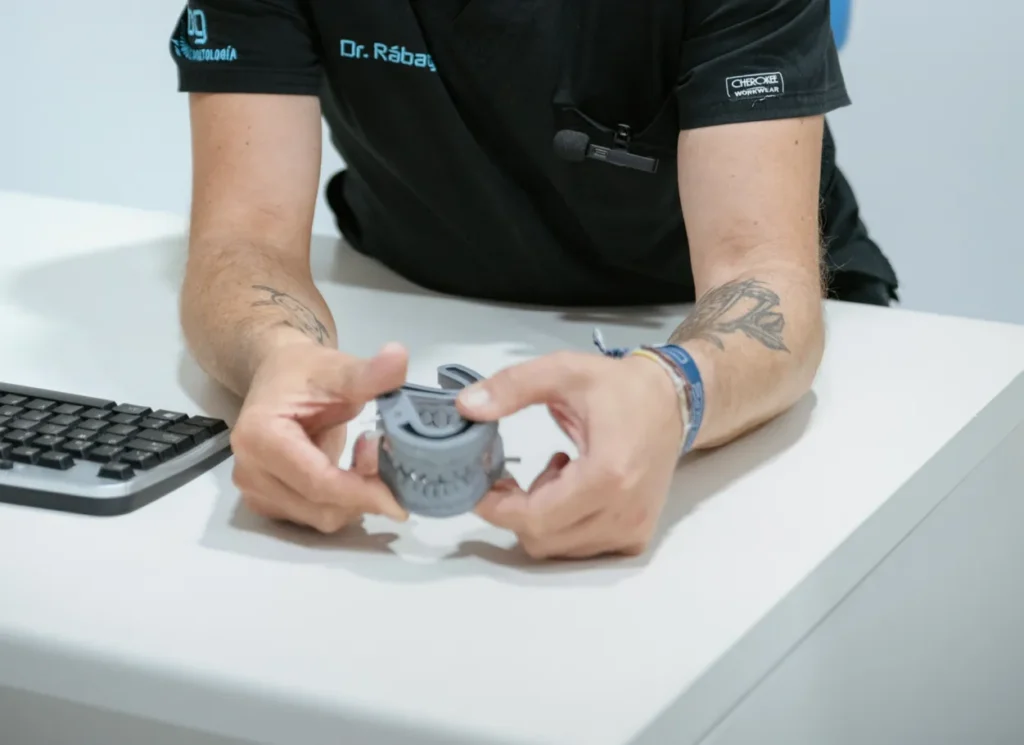
A custom-made splint that you wear at night. It doesn't break the habit, but it prevents your teeth from grinding together and distributes the force, allowing your muscles and jaw to rest.
03
Occlusion
We adjusted the bite
If the teeth do not fit together properly when closing, we consider correcting it with a bite adjustment or orthodontics.
04
Reconstruction
We repair wear and tear
When teeth have worn down or broken, we restore their shape with composite, veneers or crowns, and protect them with a splint to make them last.
Why choose RBG Clinic?
At RBG Clinic, we treat bruxism and occlusion and TMJ problems. We begin with a personalized diagnosis to find the cause and provide a solution that improves your quality of life. If you are a first-time visitor, the consultation and diagnosis are free, and you can finance your treatment for up to 24 months interest-free.
+25
years in the sector
+25 000
patients
Free
the first visit, if you are a new patient
What other patients say about Dr. Rábago
Some of our customers would like to share their experiences.
5 reviews
I'm in Jerez de la Frontera on vacation, and on my first day I had a problem with a tooth. I called the clinic, and they were kind enough to see me that same day and fix the problem so I could enjoy my two-week vacation. Excellent service and treatment. A perfect experience.
A.MExcellent personal and professional attention. Unmatched clinical professionalism. In all my consultations, I've left with top-notch procedures and no complications whatsoever.
Jose Manuel Aranda LorenteI used to be terrified of going to the dentist, but since I started going to Dr. RBG's clinic, they have gradually helped me overcome that fear. The entire staff are wonderful and very professional.
Felicidad Pedraja AlcaideI always go there with complete confidence; they're very attentive to their patients! A great team, and Dr. Rábago is a true professional who gave me back my smile.
Paloma GallegosI'm so happy. They've done a perfect job on my teeth.
M.angel Ruiz RiosQuestions about bruxism
These are the most frequently asked questions about bruxism and TMJ. If yours isn't listed, Write to us.
How do I know if I grind my teeth at night?
The most common signs are waking up with a stiff jaw or a headache, someone hearing you grind your teeth, or your teeth looking worn. During a checkup, we assess the wear and tear and the condition of your jaw muscles.
Does a night guard cure bruxism?
It doesn't cure it, but it controls it: it prevents teeth from wearing down and distributes the force so the muscles and joint can rest. That's why it's worn continuously, and we check it to adjust it.
Do the splints they sell at the pharmacy work?
It's not recommended. They're generic and don't fit your bite, so they can be uncomfortable or not distribute the force properly. A bite guard is custom-made and fitted to your mouth.
Can bruxism cause headaches or earaches?
Yes. Tension in the jaw and joint muscles can radiate to the head, ear, or neck. If you also notice clicking or have difficulty opening your mouth, it's worth getting it checked out.
Can children also have bruxism?
Yes, it's common, and it often disappears as children grow. Even so, it's a good idea to have it checked to monitor tooth wear.
How much does bruxism treatment cost?
It depends on your needs: a night guard is not the same as correcting your bite or rebuilding worn teeth. If you're a new patient, the first visit and diagnosis are free, and we'll give you a detailed estimate before we begin. You can also finance it for up to 24 months interest-free.
Book an appointment at RBG Clinic
If you clench your teeth, have jaw pain, or notice they are worn down, write to us or call us and we'll check it out.
Phone: 956 339 083
WhatsApp: 661 766 827
Schedule
Monday to Thursday: 9:30 a.m. to 2:00 p.m. – 3:00 p.m. to 6:30 p.m.
Friday: 09:30 – 14:00